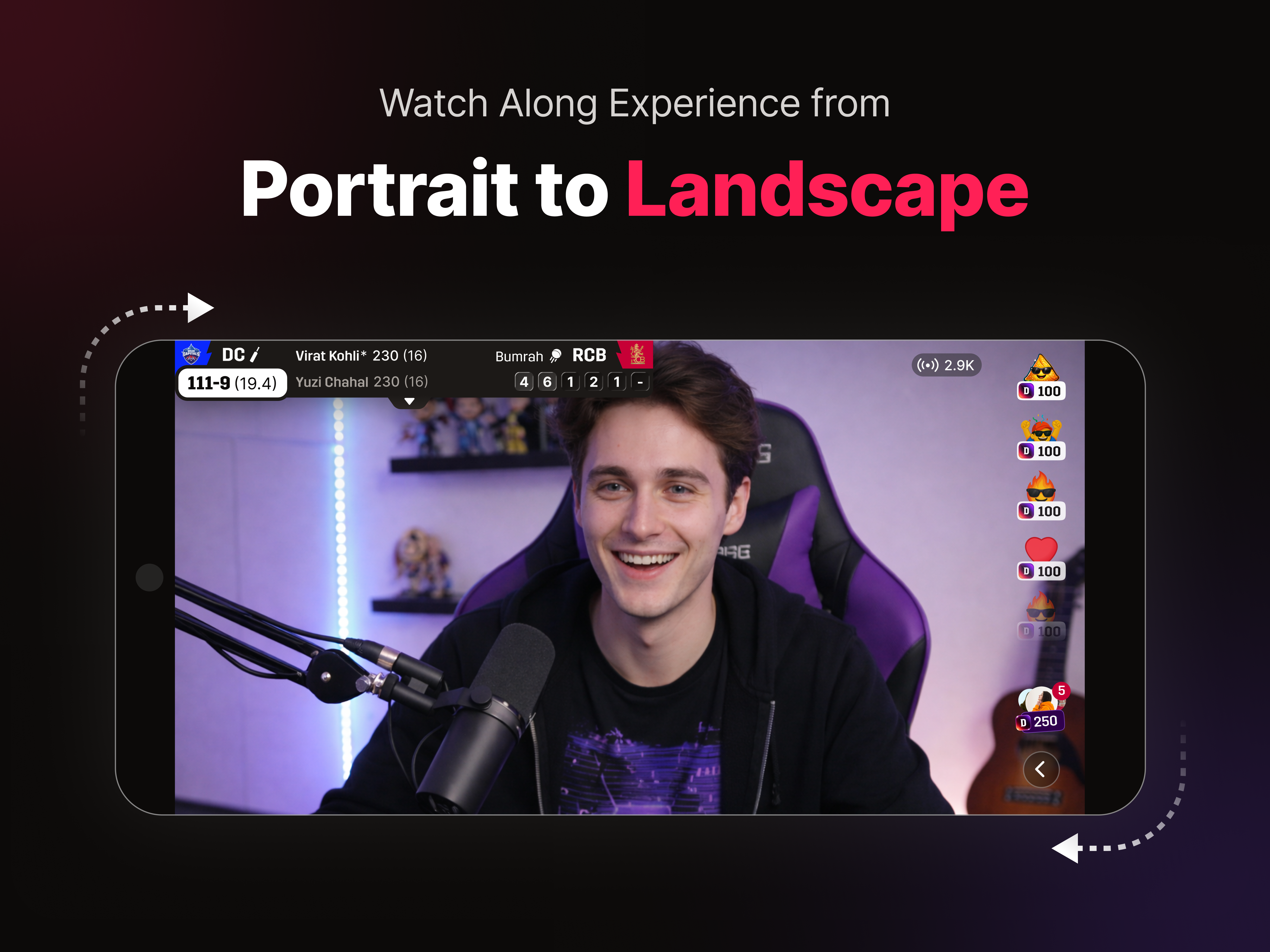
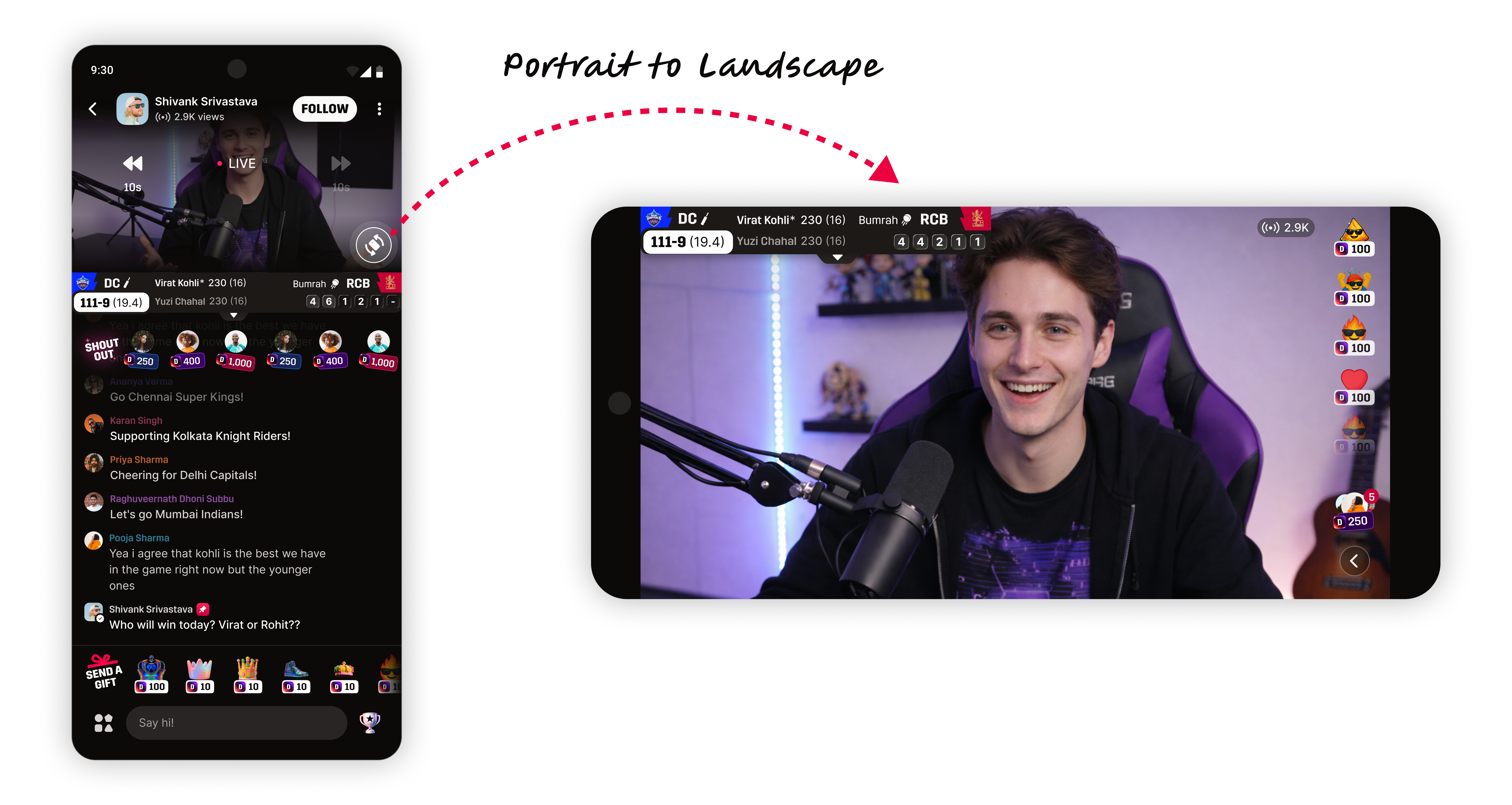
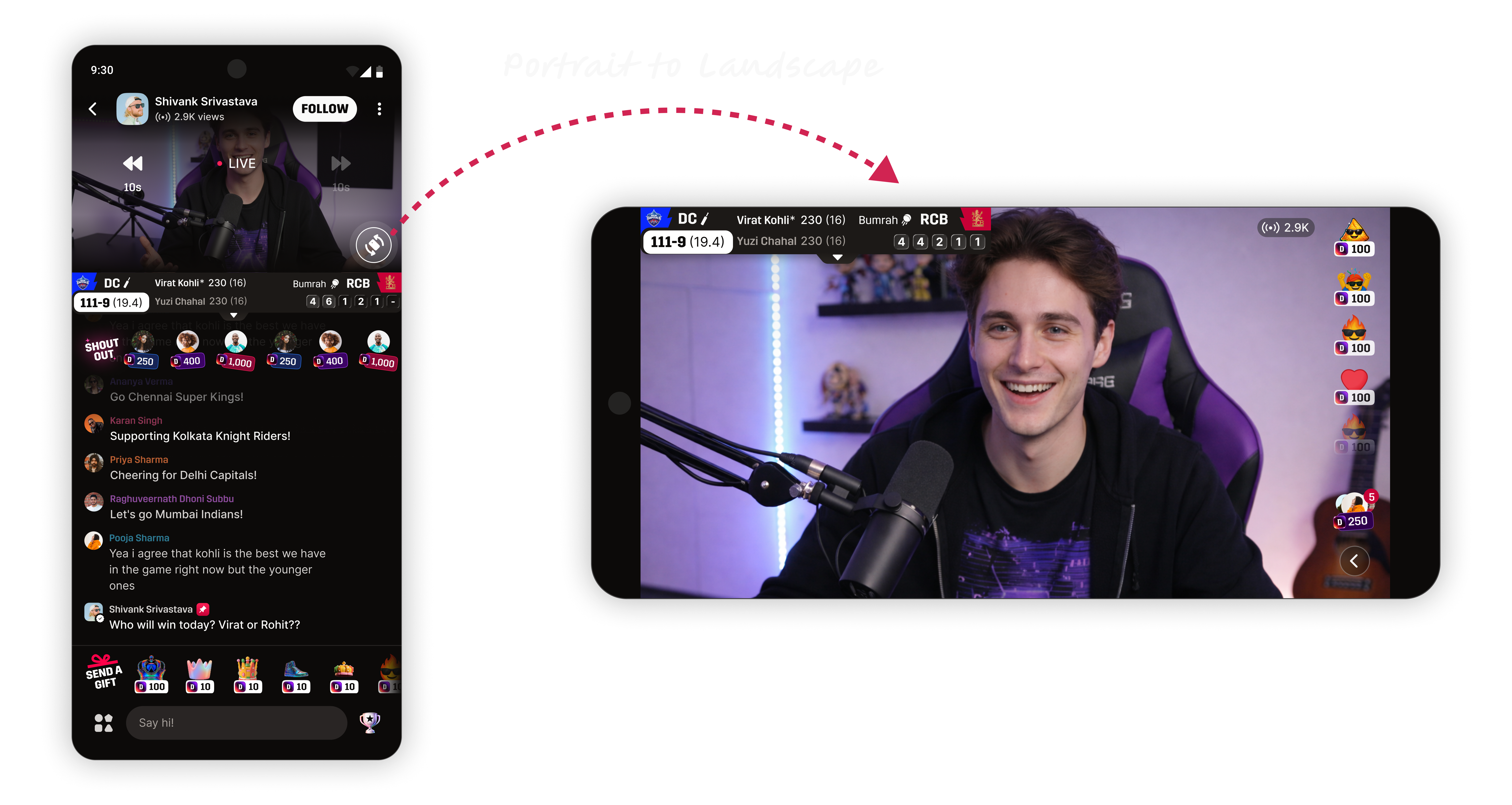
Portrait feed becomes 16:9 watch posture. The stream has to feel worth committing to the moment you turn horizontal.
Engagement team at Dream11 — live streaming, watch time, keeping users in the room. Average watch time was stuck at 2.3 minutes. The goal was to move it. The first answer was more features. That wasn't enough.
I work on the engagement team at Dream11 — live streaming, interaction, and the metrics that tell us whether users are actually watching or just passing through. Watch Along's average watch time sat at 2.3 minutes. That was the number leadership tracked, and that was the number we needed to move.
The first instinct was familiar: build more engagement. Polls, gifts, shout-outs, activity layers — features designed to give people reasons to stay. People used them. Session length barely moved. Activity went up. Commitment didn't.
The project didn't start in a roadmap review. It started as a side conversation at the table — a product manager and I asking a simple question: why do long-form live apps default to landscape, and we're still portrait-first? We pulled up the platforms already living inside the Dream11 ecosystem and looked at how they handled serious viewing.
We benchmarked three top live streaming platforms — YouTube Live, Twitch, and Kick. All three offered landscape as a first-class watch mode. TikTok was the only portrait holdout, and it was built for short-form loops — 8 to 12 minute sessions, not ninety-minute cricket streams. The pattern was already visible. Watch Along was the outlier. That was how we approached the project — not as a layout refresh, but as a bet that changing how users held the phone would change how long they stayed.
From the problem to the posture shift.
With the problem framed, the arc became clear. The product lived on mobile, but it behaved like a casual portrait feed — a bad match for long-form sports streams. The work was about changing posture from browse-and-leave to rotate-and-commit.
The engagement features weren't wrong — they just couldn't fix a format problem. The streams were long-form, but portrait told a short-form story: light, interruptible, always one swipe away from something else. The issue wasn't missing activity. It was posture.
Reframing only works if you have proof strong enough to bet on.
The table-side benchmark wasn't a formal research sprint — it was two people pulling up how the top live platforms actually worked. But the pattern held under scrutiny. The question was not whether we had perfect certainty. It was whether we had enough signal to make the right aggressive move.
The platforms built for long sessions had already made the same decision: landscape for serious viewing, side surfaces for interaction, 16:9 as the default live frame.


We measured the project the way the business felt it. Watch time was the north-star metric. Chat and activity health mattered, but they were secondary reads on whether the new mobile posture was working.
Where strategy had to become a real mobile product.
The initiative had two parts: landscape video inside portrait, and a fully rotated landscape phone experience. I owned the second part — making the behaviour-shift thesis real at the product level.
Rewriting the hierarchy, not just rotating the UI.
This was not a web-style side panel exercise. The design had to preserve participation without letting it retake the centre of the screen.
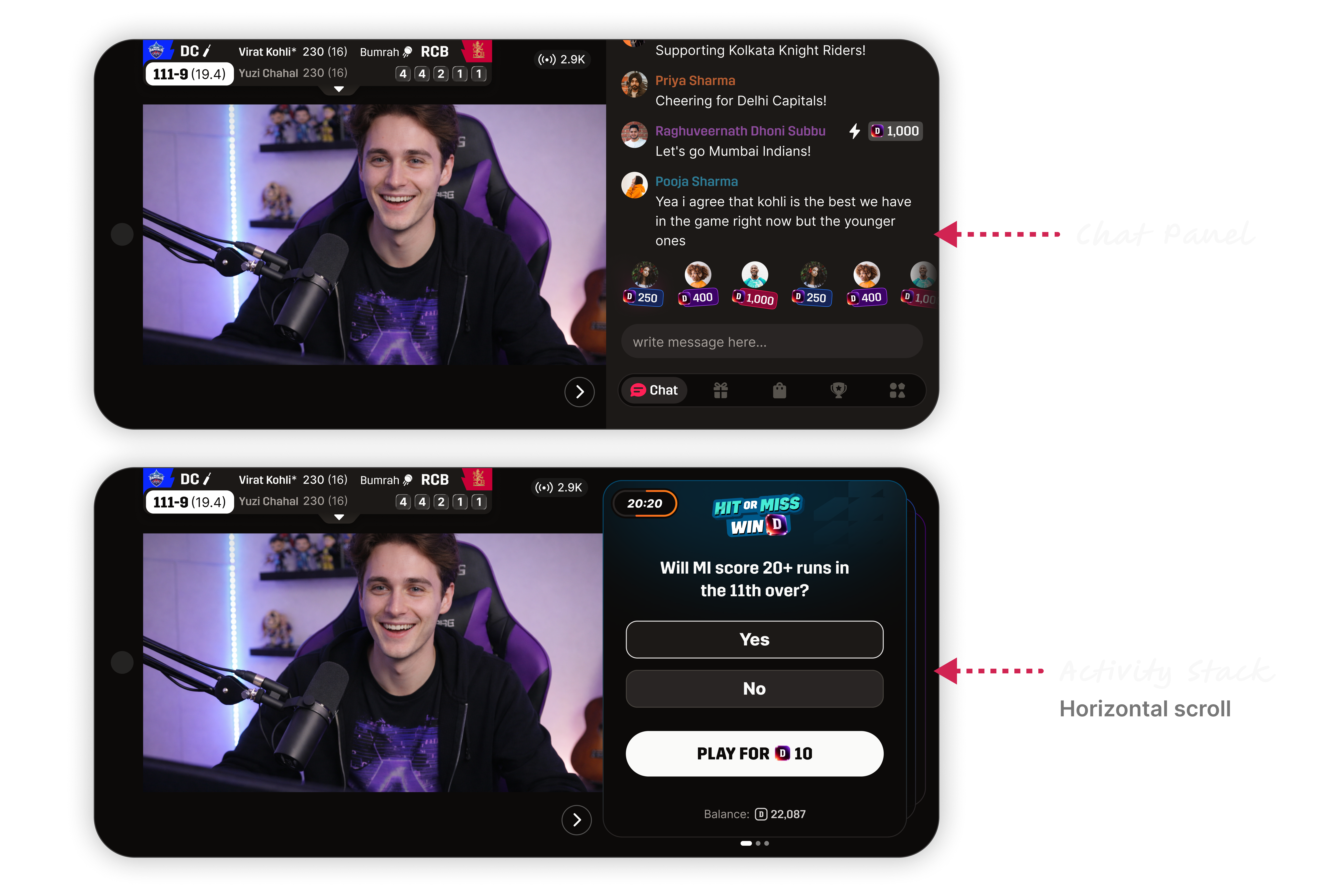
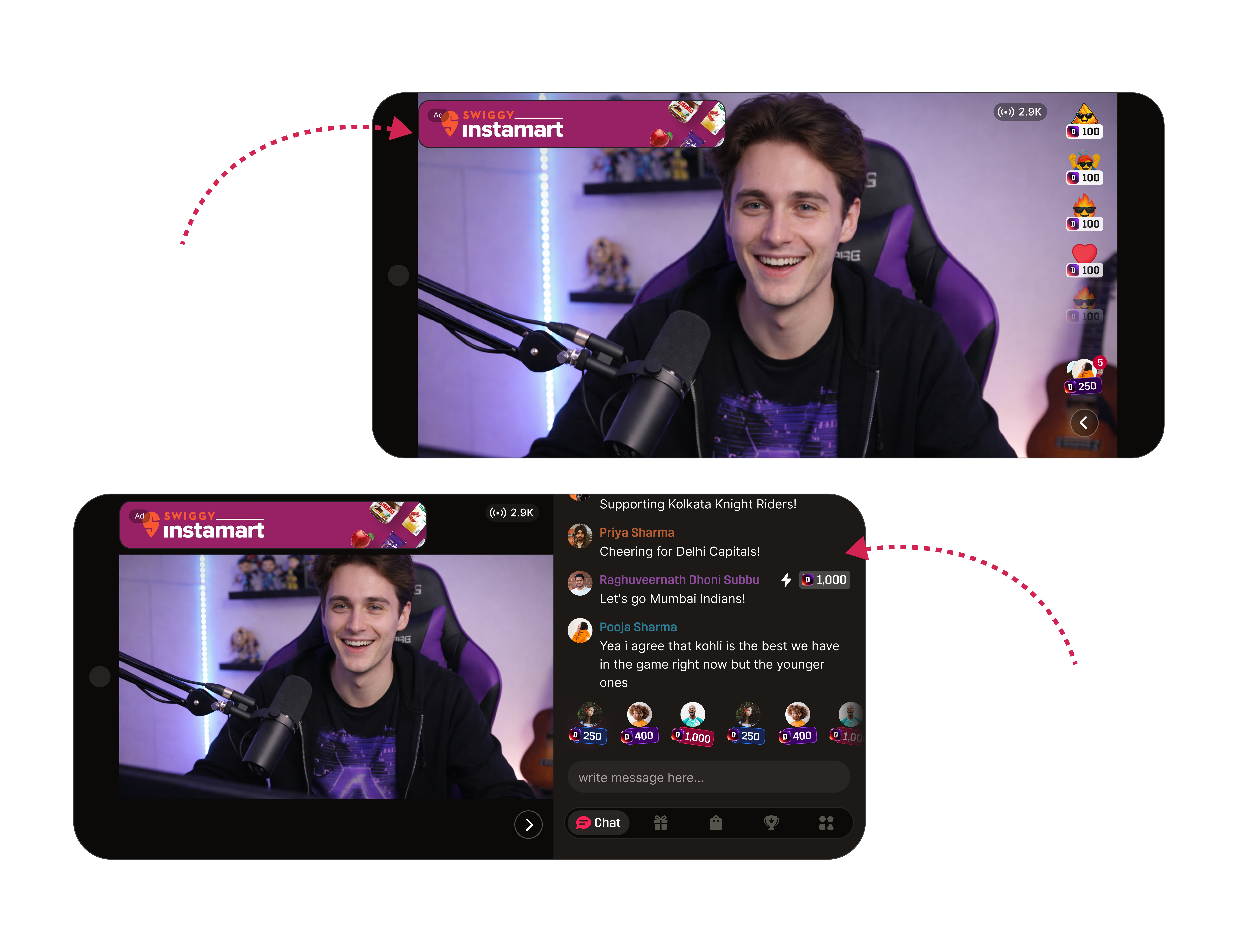
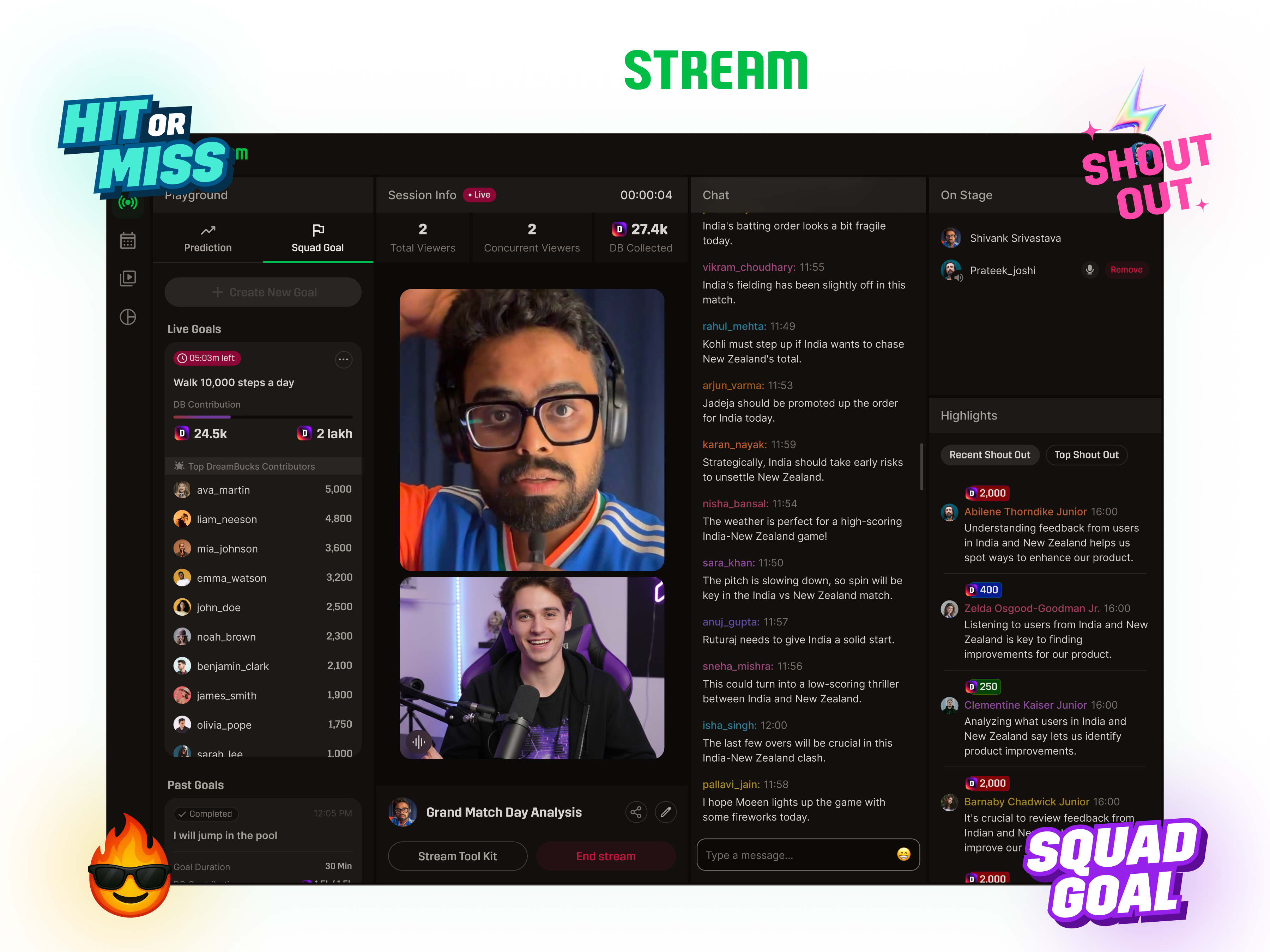
Portrait feed becomes 16:9 watch posture. The stream has to feel worth committing to the moment you turn horizontal.
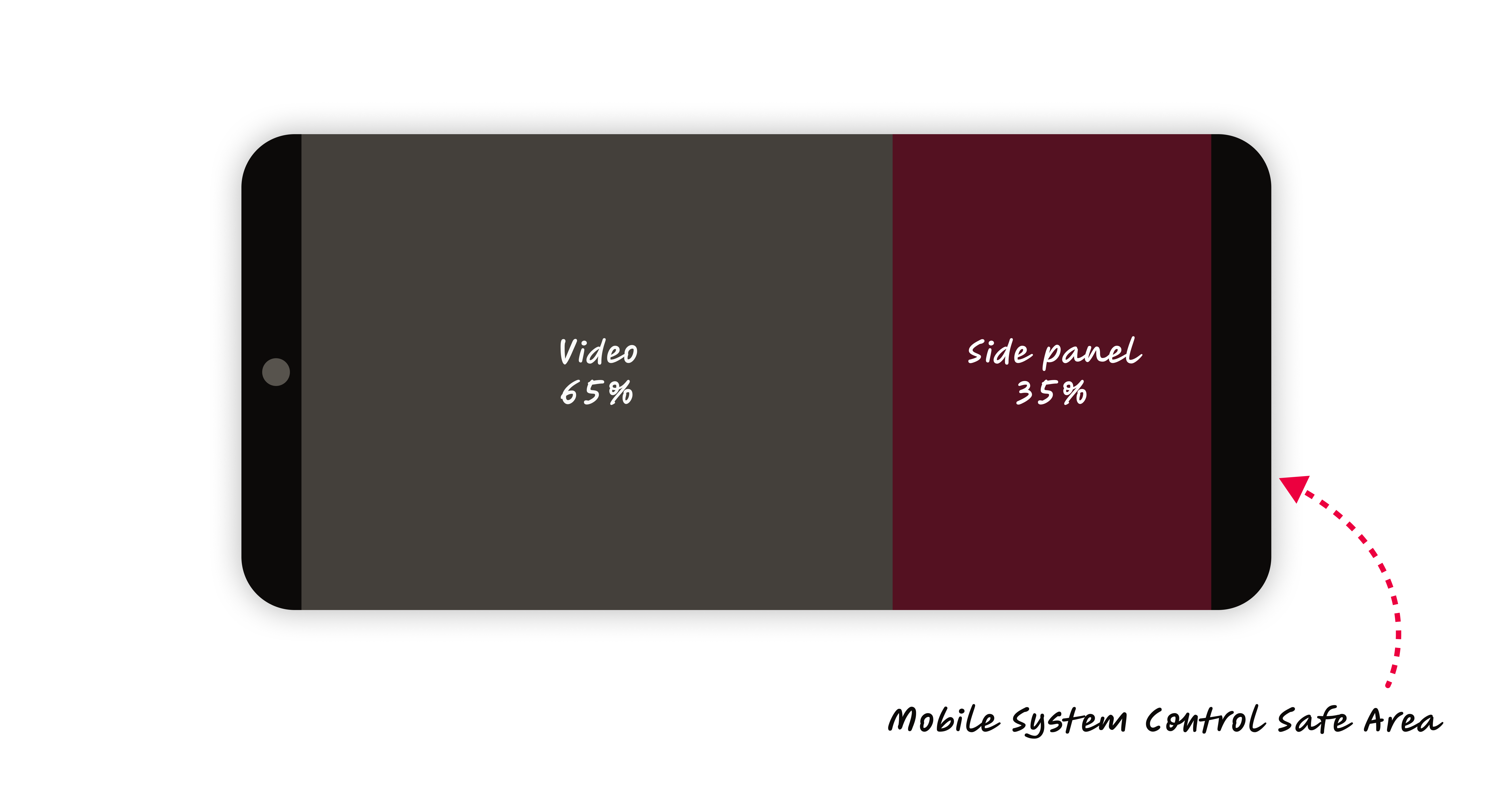
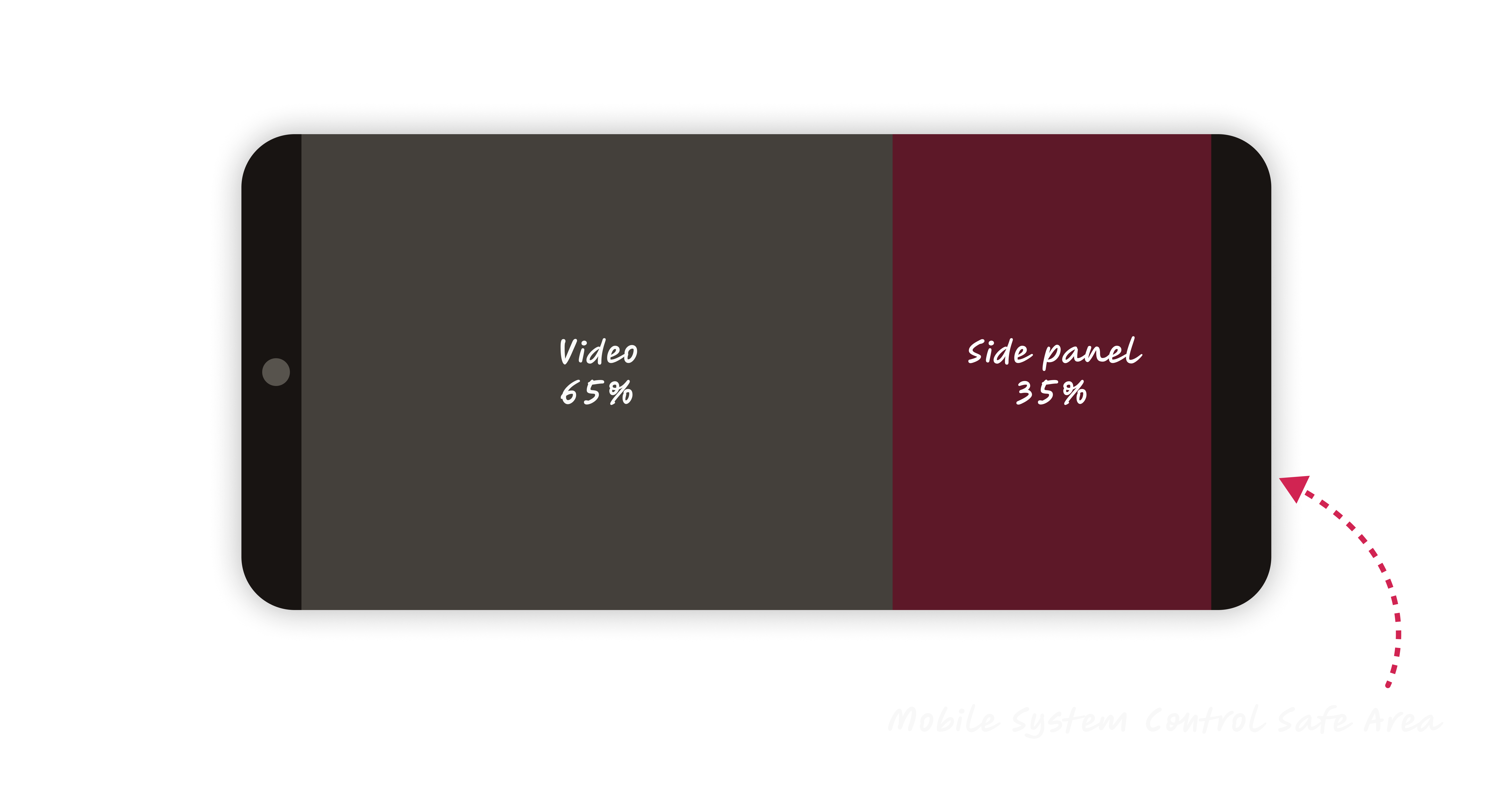
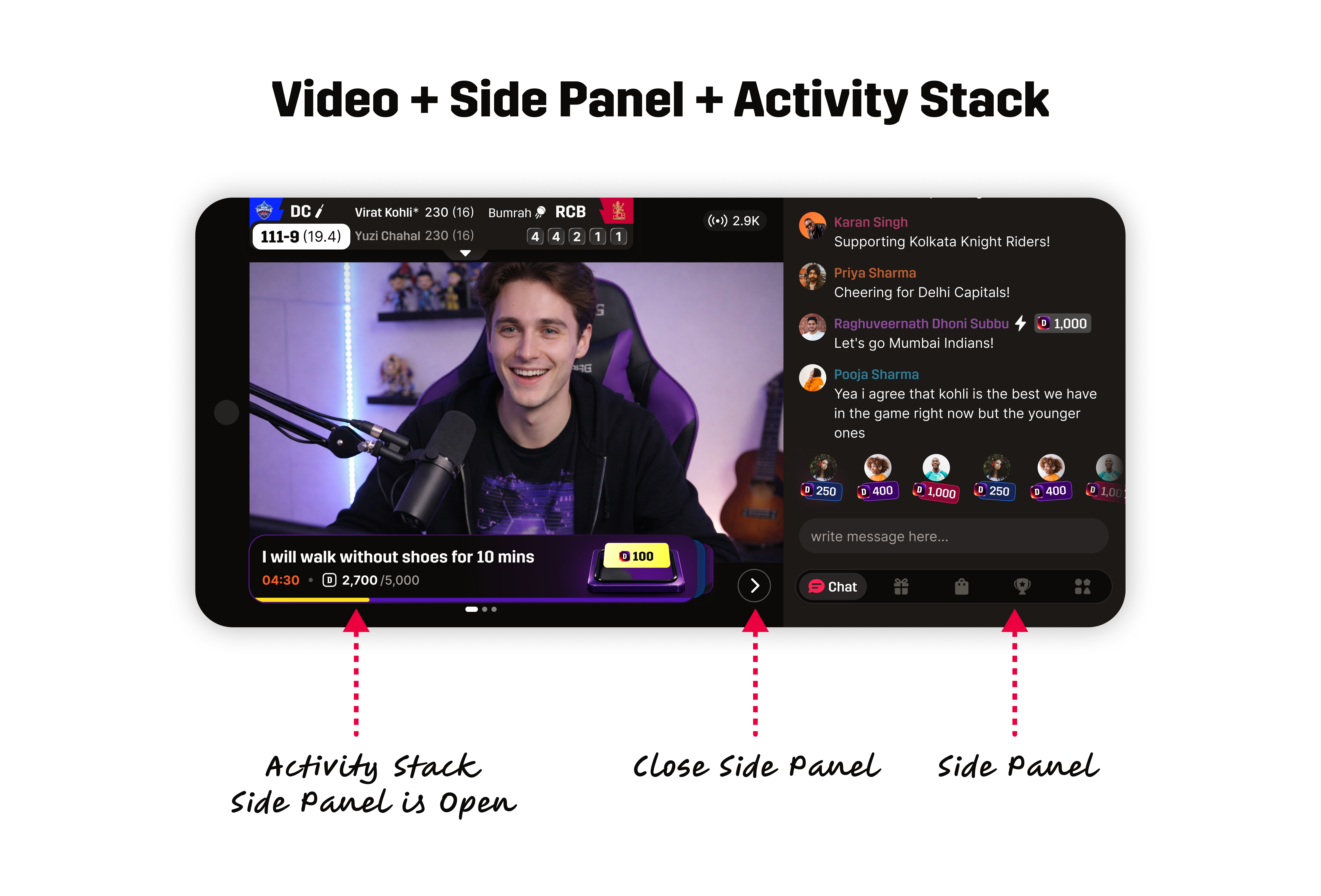
Video holds 65%. Side panel takes 35%. Video leads; the panel supports.
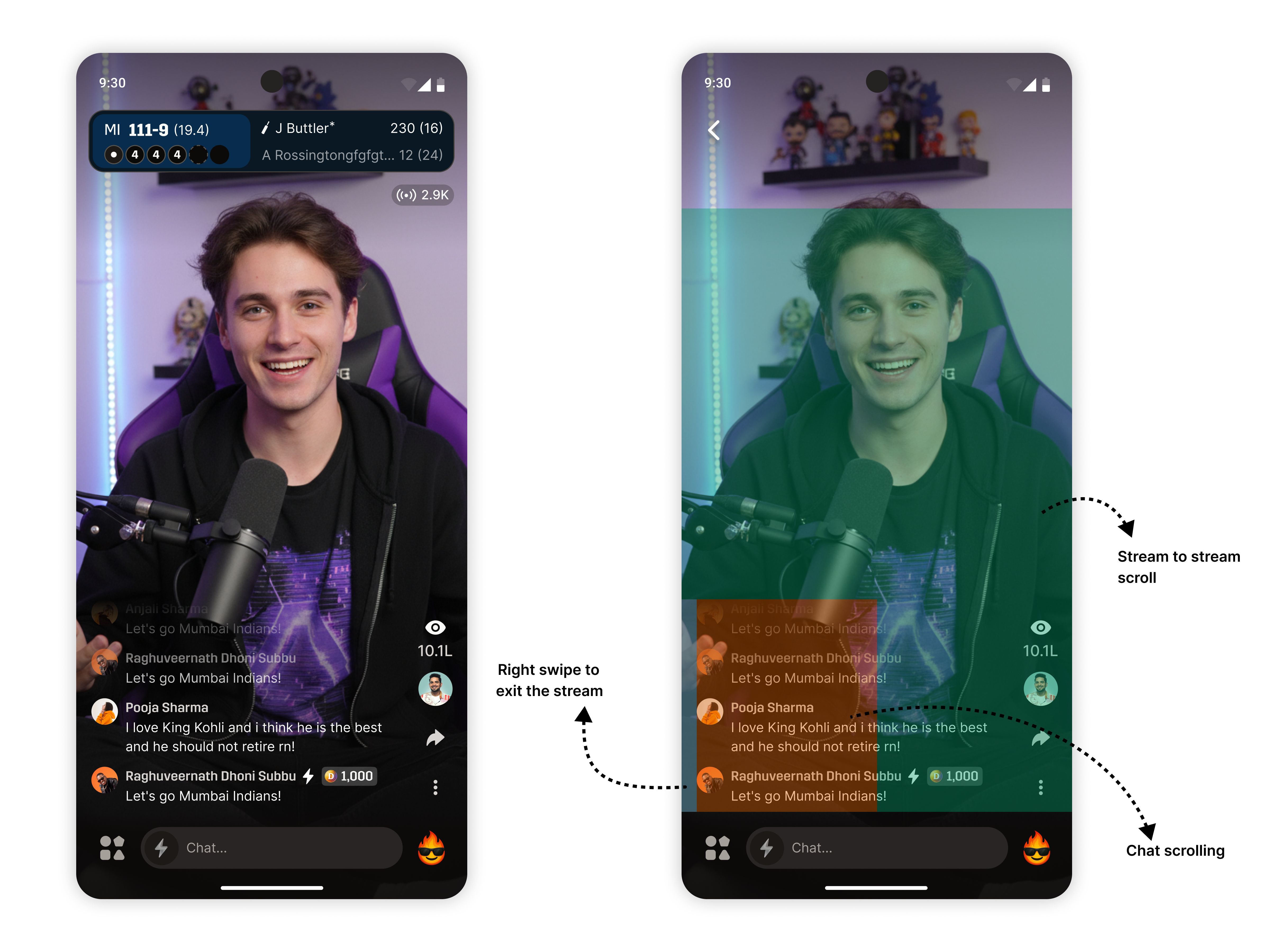
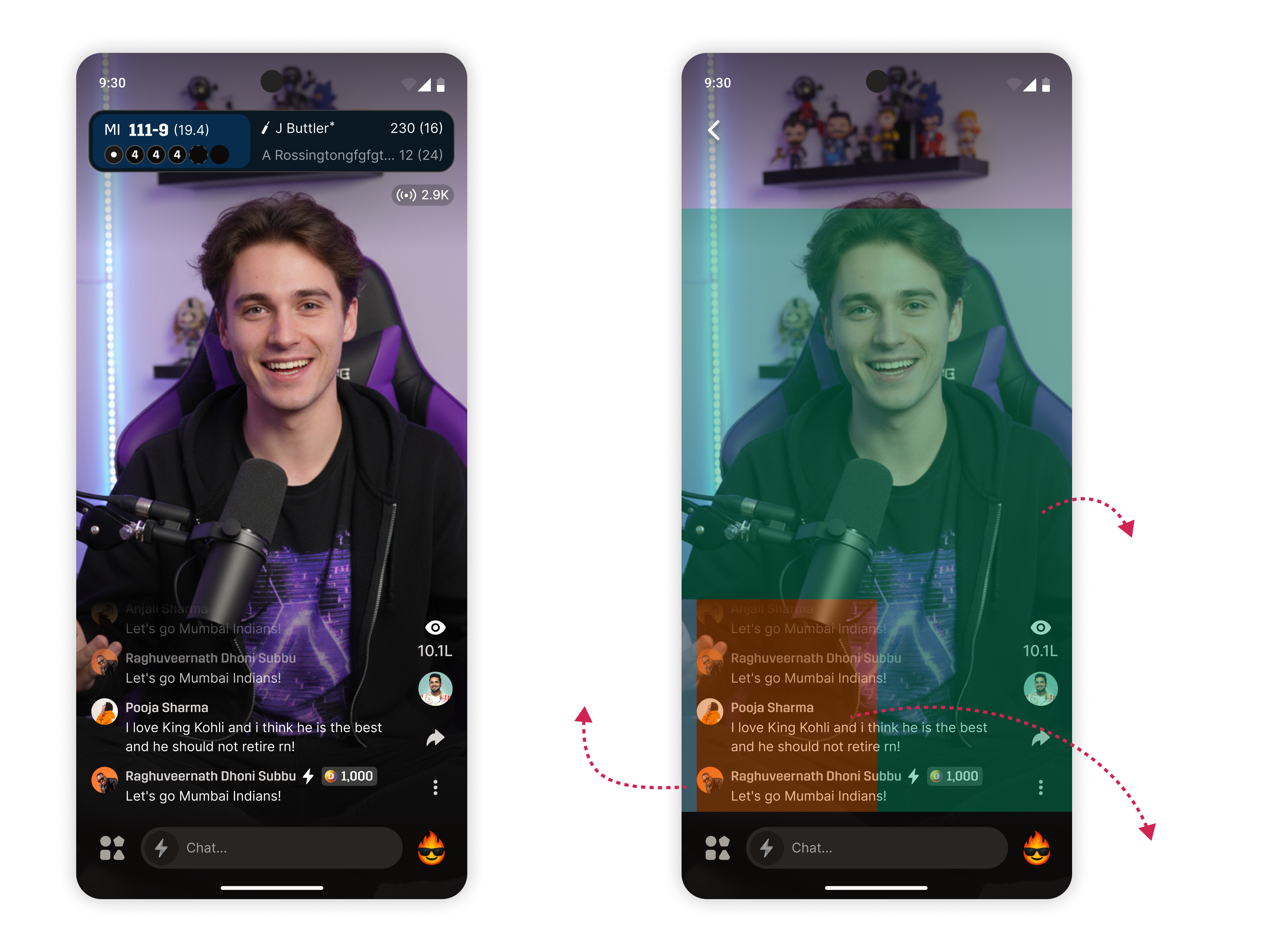
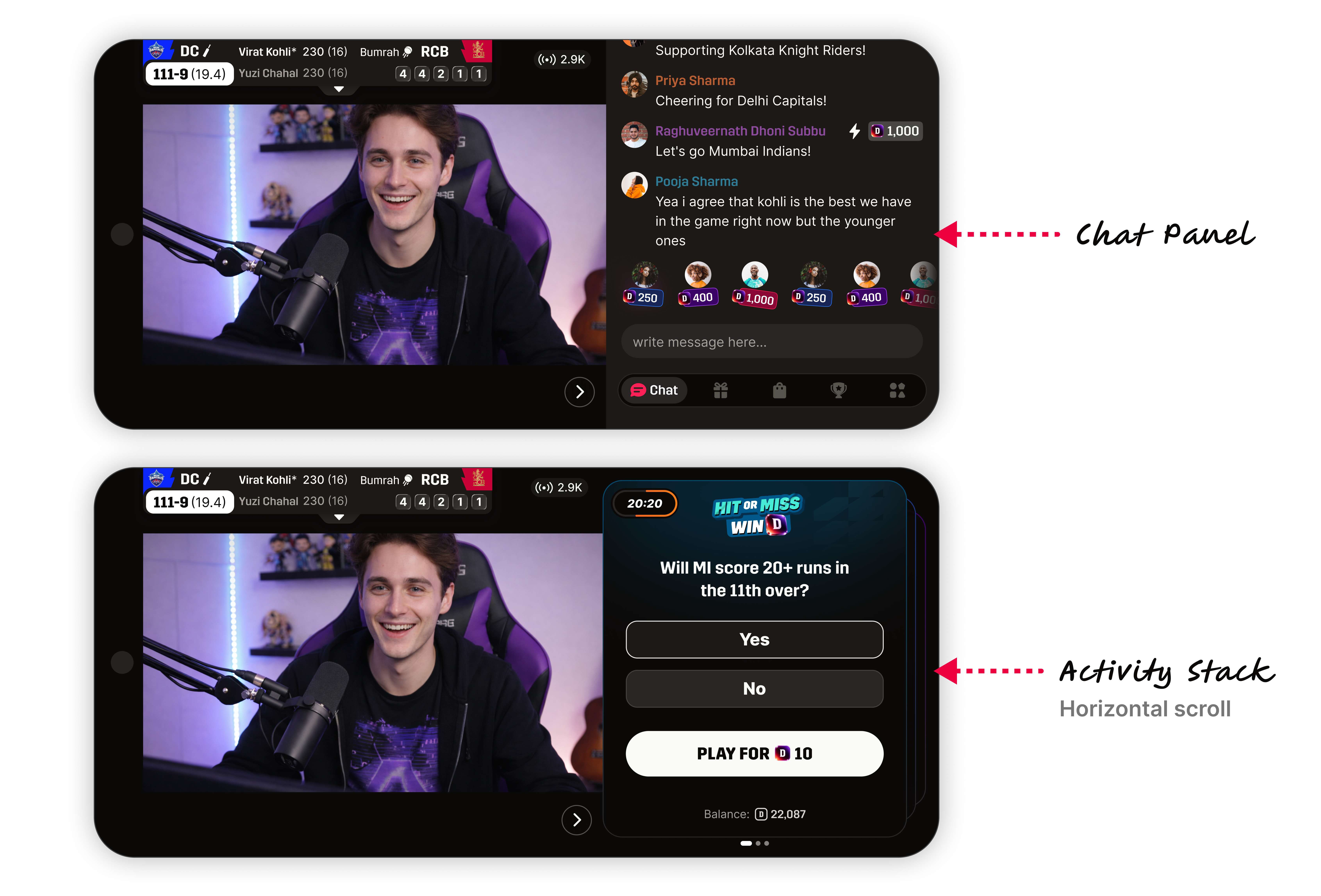
Participation stays one tap away — chat, gifts, polls and Hit & Miss move to the side rail instead of stacking on top of the stream.
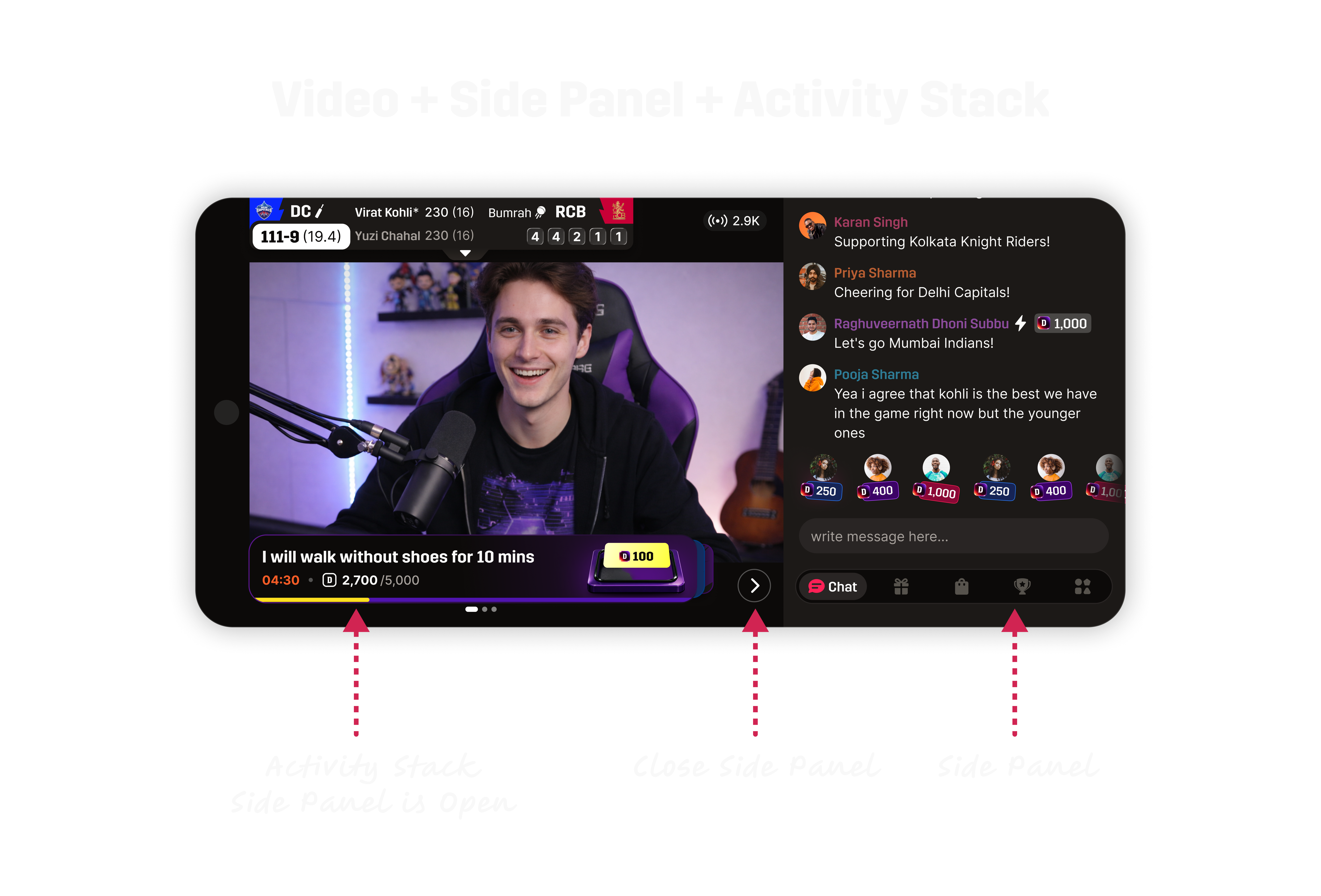
Below: the rotated mobile mode. Stream holds the left two-thirds. Chat, activity, gifts and Hit & Miss occupy a single right-rail panel. Polls, Squad Goal and On Stage surface as overlays inside the video without breaking the watch posture.
Making the stream more focused did not remove product complexity. It made the tradeoffs impossible to ignore.
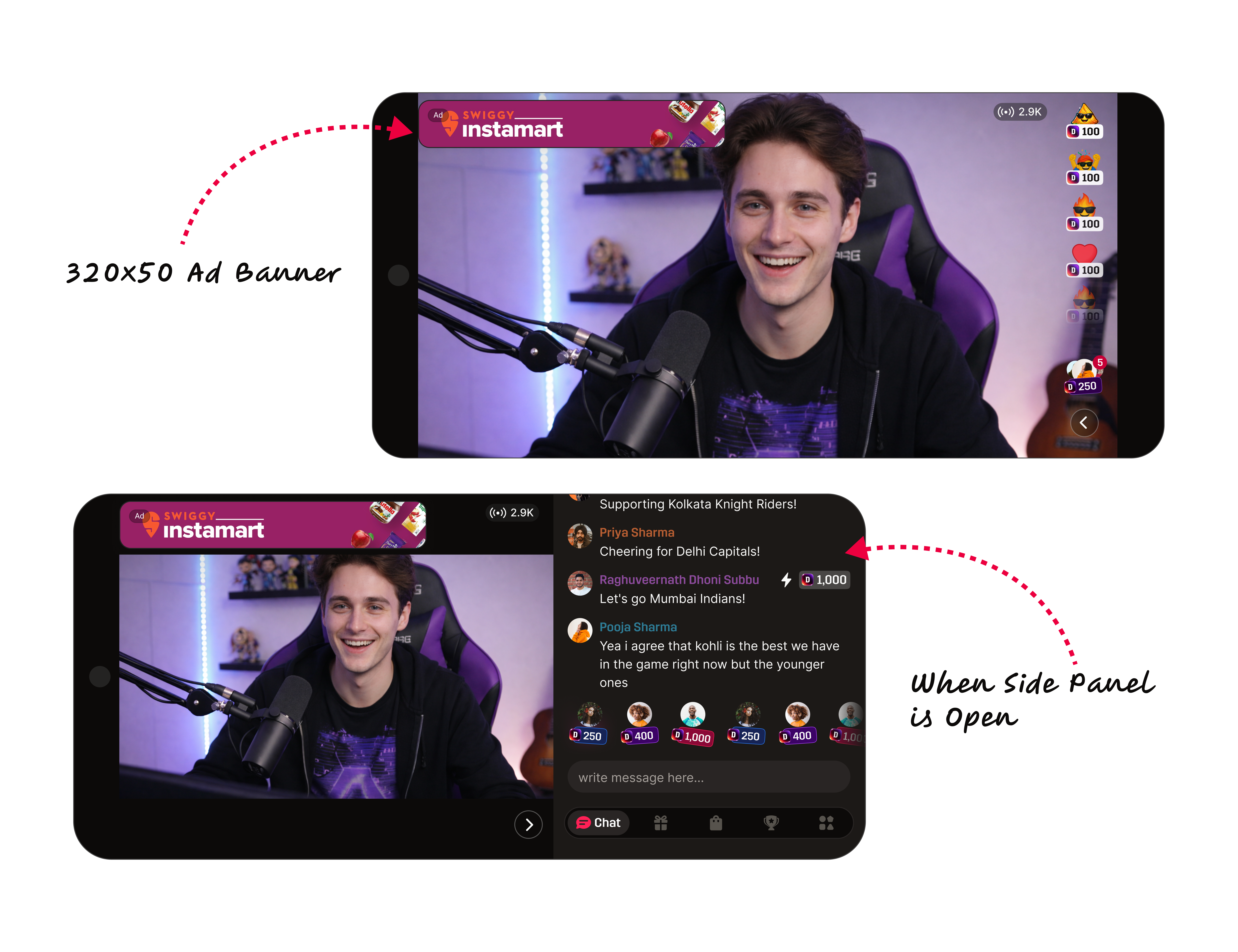
Ads were a primary revenue surface, and removing them in landscape was not on the table. In the tighter mobile canvas they overlapped the stream when carried over at full size.
Keep ads in view but resize to 320×50 units. Visible enough to matter, small enough to stop competing with the stream.
320×50 is the long-running mobile banner standard — a known yield surface that publishers and creatives already optimise against.
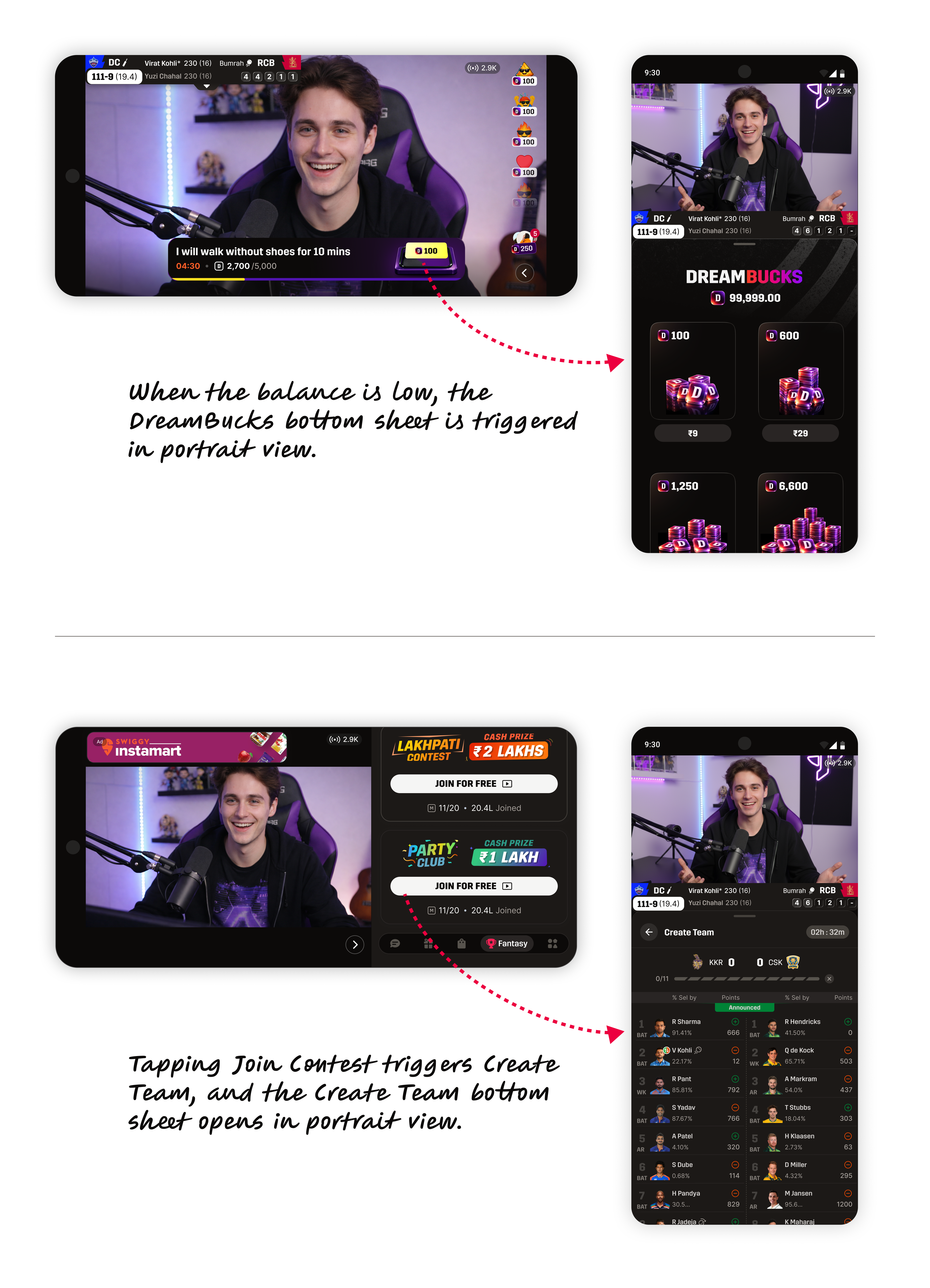
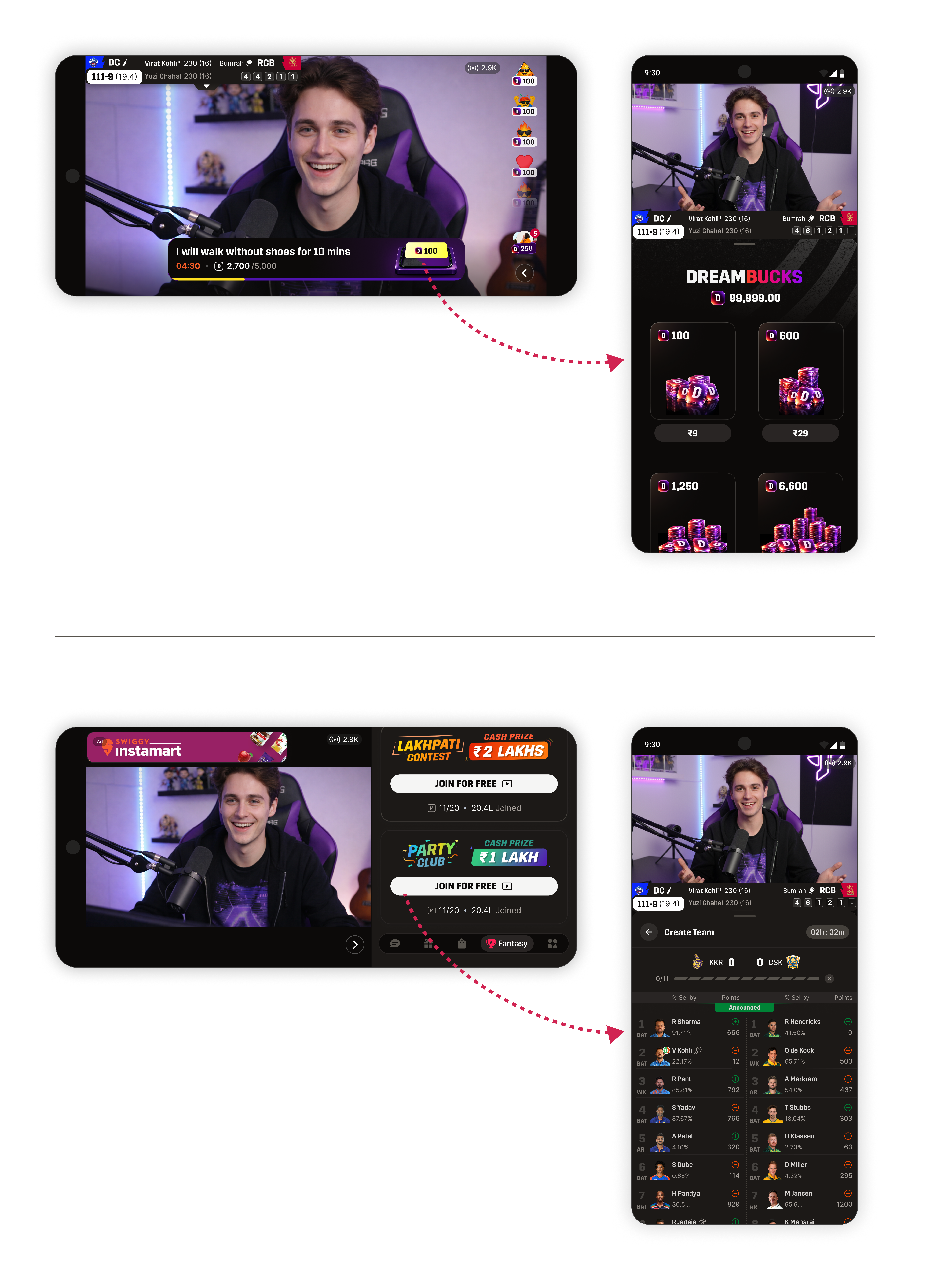
Fantasy team creation and DreamBucks top-up were too heavy for the side-panel model when ads, activities and live video were all active on the same phone screen.
Rather than force parity, the product changes orientation when those tasks begin — portrait for fantasy and payments, landscape for watching.
Fantasy and payments already lived in portrait everywhere else in the app. Carrying that posture for the duration of the task kept the cognitive model intact.
When the posture changed, the metrics changed with it.
The first month after launch validated the thesis: this was not a cleaner layout — it was a stronger mobile viewing mode.
Conversation stayed alive. Reactions and predictions held. Polls and DreamBucks softened — the cost of letting video take the lead.
Conversation stayed alive even after video took the lead.
Mostly flat once the new mobile hierarchy settled in.
Also held roughly flat after the move to landscape.
Weaker in the new hierarchy where video became the first focus.
Monetization depth still showed the cost of the new balance.
The strongest design move was not a component. It was a behaviour shift.